
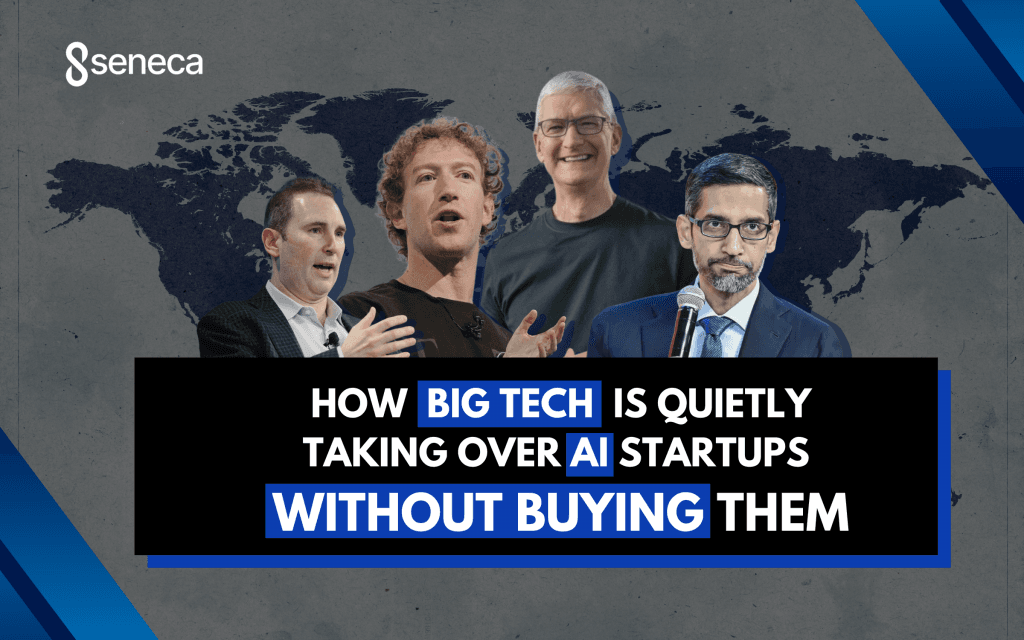
Big Tech is absorbing AI startups through pseudo-acquisitions, gaining talent and technology while avoiding regulatory hurdles.
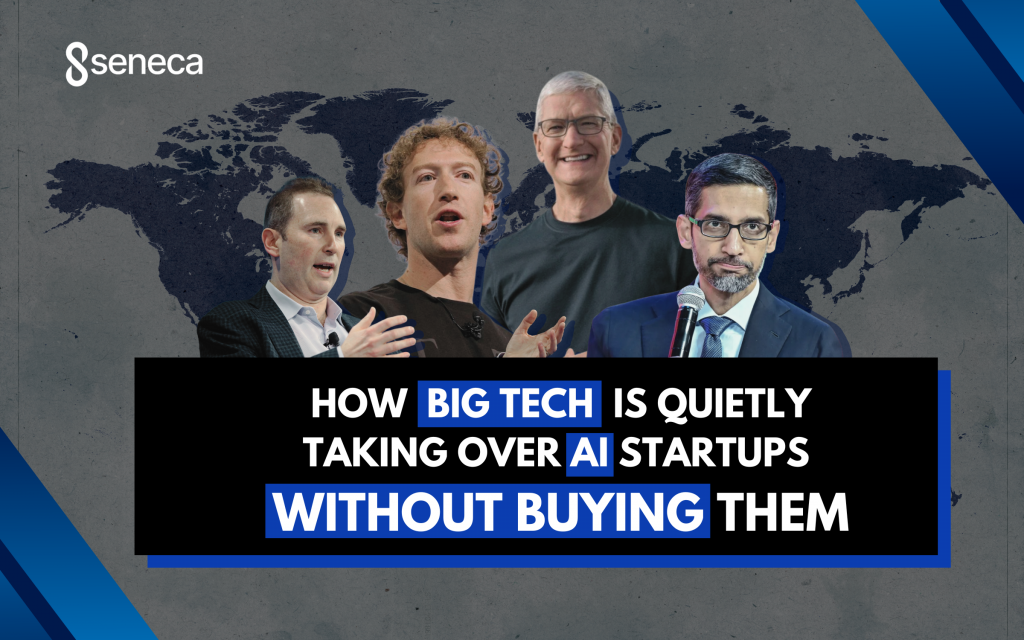
OpenAI, Inflection, Adept, and Character AI are just a few of the AI startups that tech giants are absorbing in 2024. But here’s the catch: none of these companies are being purchased outright.
Instead, companies like Microsoft, Amazon, and Google are finding ways to bring in the technology, resources, and people from these startups without going through traditional acquisitions. This strategy, often called pseudo-acquisitions, allows these companies to avoid regulators while still strengthening their position in the AI industry.
So, how are tech giants making this work, and what does it mean for the startups, their employees, and the AI market as a whole?
How Pseudo-Acquisitions Work
Since AI took off in 2023, startups have been leading the way with new technologies and tools. However, instead of acquiring them completely, Big Tech has started making deals to license their technology or hire their employees.
For example:
Microsoft paid $650 million to access Inflection AI’s tools and top talent.
Amazon spent $330 million to license Adept AI’s technology and brought in its best researchers.
Google struck a deal to license Character AI’s technology and brought its co-founder and 20% of the team back into Google.
These deals allow tech giants to gain the technology and people they need to dominate the AI space without the scrutiny that comes with a full buyout.
Why Big Tech Prefers This Strategy
Traditional acquisitions often attract regulators’ attention, especially when they involve companies like Microsoft or Google. By structuring these deals as investments or partnerships, tech giants can avoid the extra red tape.
For startups, these deals are a way to survive. Developing AI requires expensive tools, such as high-powered computers and massive cloud storage. Partnering with a Big Tech company gives startups the funding and resources they need to keep going.
But this strategy comes with trade-offs: startups lose control, and Big Tech continues to consolidate power in the AI market.
The Impact on Employees
These deals don’t benefit everyone equally. In most cases, only parts of the startup are absorbed—usually the teams working on AI research—while others are left behind.
Take Amazon’s deal with Adept AI. Amazon brought over its researchers but didn’t hire product, sales, or support teams. This leaves many employees in a tough spot, while others get access to better resources and opportunities at a tech giant.
This selective hiring creates a divide within startups, making it clear which roles Big Tech values most.
Regulators Are Starting to Notice
For now, Big Tech has largely avoided scrutiny over these deals. But that may not last.
The Federal Trade Commission (FTC) has already subpoenaed Microsoft for more information about its deal with Inflection AI. Amazon’s partnership with Adept is also under investigation, and several U.S. senators have raised concerns about whether these deals harm competition.
The challenge for regulators is that pseudo-acquisitions don’t meet the traditional definition of mergers or buyouts, even though they give Big Tech the same benefits. These deals let companies consolidate technology and talent, leaving fewer opportunities for smaller players in the AI market.
What’s Happening to Startups?
Even OpenAI, which created ChatGPT, has been part of this trend. Microsoft invested heavily in OpenAI’s for-profit division, gaining access to its technology without taking full control.
For Microsoft, this was a smart move. Minority investments don’t attract the same regulatory scrutiny as full takeovers. But for the AI industry, it shows how much influence Big Tech can gain without triggering any alarms.
Meanwhile, startups face growing challenges. Many of them focus on user growth instead of profits, which leaves them vulnerable to deals like these. While the funding helps them stay afloat, they often lose independence in the process.
The Investor Problem
Investors, especially venture capitalists (VCs), aren’t thrilled about pseudo-acquisitions either.
VCs usually invest in startups expecting big returns, often from a full acquisition. But licensing deals and partial agreements don’t generate the same payouts. Instead of earning five to ten times their original investment, VCs are often left with much smaller returns.
These deals may help startups survive in the short term, but they aren’t as rewarding for the people who invested in their success early on.
What Comes Next?
As Big Tech continues to absorb AI startups, regulators are under pressure to act. The FTC and the Department of Justice (DOJ) are looking into deals involving Microsoft, Amazon, and Google. But the process is slow, and Big Tech is moving fast.
Without new rules, these pseudo-acquisitions will continue to give Big Tech the upper hand. They’ll gain more control over AI talent and technology, making it harder for smaller companies to compete.
Final Thoughts
The rise of pseudo-acquisitions shows how Big Tech is reshaping the AI industry in its favor. By avoiding traditional buyouts, companies like Microsoft, Amazon, and Google can quietly take control of key technologies and teams without facing the usual regulatory challenges.
For startups, this trend offers short-term survival but at the cost of independence. Employees and investors, meanwhile, face mixed outcomes, with only a few benefiting from these deals.
The big question now is whether regulators can catch up before Big Tech controls the future of AI entirely.
What do you think? Are pseudo-acquisitions helping or hurting the AI industry? Share your thoughts in the comments.
Enjoyed this article?
Let’s talk about how a focused outsourcing partner can move your roadmap forward.